
 By Christian Hayes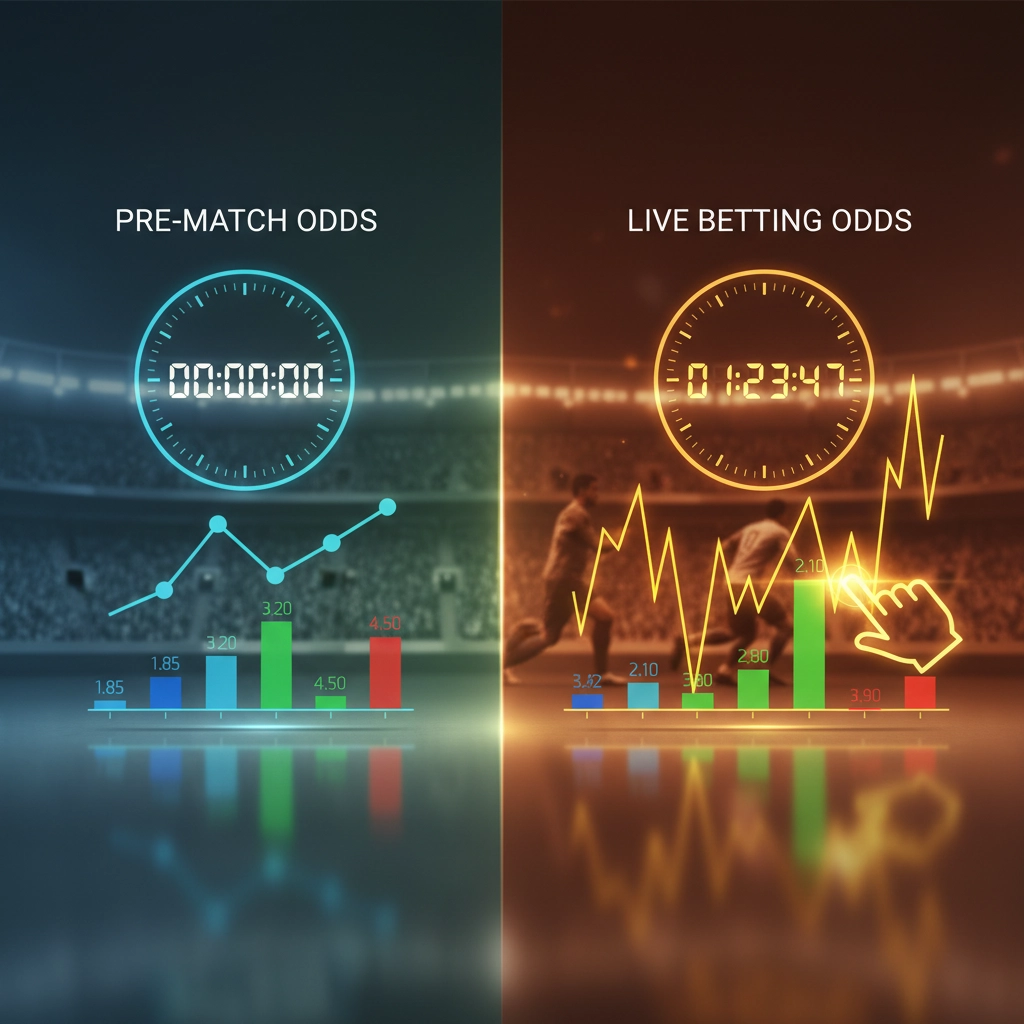
Kick-off context: Why choosing pre-match or live odds changes your edge
You make better betting decisions when you understand the timing of odds. Pre-match markets are priced with all available information before the event starts — lineups, injuries, weather, and public sentiment. Live markets update those prices in real time based on what actually happens on the field. Deciding whether to place a bet before kickoff or wait for a live opportunity affects your potential value, risk exposure, and ability to react to unfolding events.
In this first part you’ll learn how each market is formed and what early cues tell you when to strike. That foundation prepares you to use practical, timing-based strategies in the live market — which we’ll cover next.
How pre-match odds are formed and when they offer the best value
Pre-match odds reflect a blend of objective analysis and market forces. Bookmakers set initial lines using models and expert input. Those opening odds are then adjusted as money flows in and out. You should consider pre-match bets when you have:
- Superior research advantage — you have insights not yet priced in (e.g., an underrated lineup change or reliable insider info).
- Time to shop lines — pre-match markets allow you to compare multiple books for the best price or promotions.
- Long-term staking goals — if you manage bankroll based on season-long value, locking in odds early preserves your plan.
Pre-match betting is particularly effective in markets where information is stable and predictable: league tables, long-term futures, or events with limited in-play volatility (e.g., tennis on a consistent surface). You get the best leverage when you identify mispricings before the market corrects them.
How live odds move and what early live signals you can read
Live odds are dynamic and heavily influenced by immediate events: goals, injuries, red cards, momentum swings, and tactical substitutions. Bookmakers use automated models fed by event data to reprice markets within seconds. As a bettor, you can profit from two types of live movements:
- Predictable adjustments — when an obvious event (like a red card) forces the market to re-evaluate probabilities, creating clear value if you anticipated the tactical fallout.
- Overreactions — short-term emotional responses from the public, especially after dramatic plays, can push prices away from statistical reality for a short window.
Early live signals to watch include shot quality (expected goals), possession patterns, and team behavior after set-pieces. If you track these metrics, you’ll spot when odds diverge from the underlying chance of an outcome. However, live markets require fast execution and discipline: liquidity can be thin, and prices move quickly.
With this groundwork in place — how pre-match odds are built and how live odds react to event cues — you’re ready to explore specific timing strategies, bankroll adjustments, and examples of when to strike in-play. In the next section, we’ll break down concrete entry rules and scenario-based tactics for striking at the right moment.

Concrete entry rules for live betting
Turn your judgment into repeatable outcomes by using rule-based entry criteria. Before you click, answer a short checklist that converts intuition into an objective trigger:
- Market filter — only trade markets you track (e.g., match winner, total goals, next-goal). Avoid exotic lines unless you understand how they reprice live.
- Minimum edge — require a defined gap between your model/estimate and the market price (for example, a 5–8% implied probability advantage). Smaller edges are eaten by commission and execution latency.
- Signal confirmation — wait for at least two corroborating cues (xG trend + dangerous possession zone, or red card + opponent substitution pattern) before entering.
- Max exposure timeframe — set how long you intend to hold the position. Live markets move fast; decide if this is a 5-minute scalp or a position you’ll carry to full-time.
- Liquidity and price ladder check — confirm available market depth at the price you want. If the ladder is thin, either reduce stake or skip the trade.
- Execution rule — use limit orders where possible to control price, and pre-plan acceptable slippage if you must market-buy for speed.
Keeping entries mechanical reduces emotional overtrading and ensures you only take situations where the expected value (EV) is demonstrable. Document every live trade — time, trigger, stake, and outcome — to refine thresholds over time.
Scenario-based tactics: when to pounce in-play
Different game events produce distinct betting opportunities. Below are practical tactics tied to common scenarios.
- Early red card (soccer): Immediately re-evaluate team tactics. If the favoured team loses a defender early, odds for them to concede will jump. If your data shows the undermanned team still maintains high xG against, consider laying the favourite at inflated odds or backing the underdog with a tight stop.
- Momentum shift after a big chance: If a team consistently creates high-quality shots over several minutes, odds on goals or a comeback will lag expected value. Back over/goal markets or next-goal on the pressing side during these windows.
- Halftime corrections: Markets often overreact to short-term scoring clusters. If first-half randomness (a fluke goal) skews lines, use halftime to back the statistically likelier second-half outcome—provided lineups and fatigue indicators support it.
- Tennis break points: Use point-level data. When a player faces multiple break points but saves them through high first-serve percentage, the market may underprice their hold probability for the next game—size small, fast stakes on that player to hold.
- Basketball runs: In-play lines react to 10–0 runs. Anticipate mean reversion if the scoring burst came from above-average three-point luck; fade the run by backing the opposing team on the next possession market or handicap.
Match your tactic to market behavior: scalps for quick imbalances, larger positions for sustained statistical advantages.

Adjusting bankroll and stakes when you switch to live
Live betting increases variance. Reduce unit size relative to your pre-match bankroll allocation and size stakes based on confidence and liquidity, not impulse. Practical rules:
- Cut default stake by 20–50% for in-play trades unless the edge is exceptionally strong.
- Use Kelly fractioning conservatively (10–25% of Kelly) to account for execution risk and estimation error.
- Set a daily live-loss limit — when hit, stop and review. It prevents tilt-driven revenge betting.
- Track realized vs. expected P&L by scenario. Increase stakes in repeatable edge types, reduce in noisy or thin markets.
Disciplined sizing keeps short-term variance manageable and lets you exploit live edges without jeopardizing long-term plans.
Putting timing into practice
Make timing part of your routine: set rule-based entry criteria, limit live exposure, and test strategies with small stakes until your edge proves repeatable. Keep a tidy journal of triggers, execution details, and outcomes so you can separate skill from luck. Use technology to your advantage—live stats, quick line comparisons, and order placement tools speed execution and reduce mistakes. For quickly checking multiple prices before kickoff, consider using Odds comparison tools.
Finally, treat live betting as a skill you develop over time. Patience, discipline, and continuous feedback are what turn good instincts into consistent advantage.
Frequently Asked Questions
When should I prefer pre-match bets over live bets?
Choose pre-match when you have a clear informational advantage, time to compare lines across books, or when the market is relatively stable (e.g., futures, predictable matchups). Pre-match is also better if you want lower variance and you follow a season-long staking plan.
How much should I reduce my stake for live betting?
Reduce your default stake by 20–50% for most in-play trades to account for higher volatility and execution risk. For edges backed by strong, repeatable signals, you can increase gradually—but use conservative Kelly fractioning (10–25% of full Kelly) and always respect a daily live-loss limit.
What in-play metrics give the best early signals for value?
Focus on actionable metrics that correlate with scoring or momentum: expected goals (xG) trends, dangerous possession zones, shot quality, first-serve percentages in tennis, and situational events like red cards or key substitutions. Combine at least two corroborating signals before entering to reduce false positives.